
The van is at your door, the rider wants a signature, and there are 312 lines on the delivery note. Checking properly would hold him for an hour. So you sign, and your stock record now says you have things you may not have.
Receiving is the cheapest place in the whole business to catch a problem, and the most commonly skipped.
The problem: signing for paperwork instead of goods
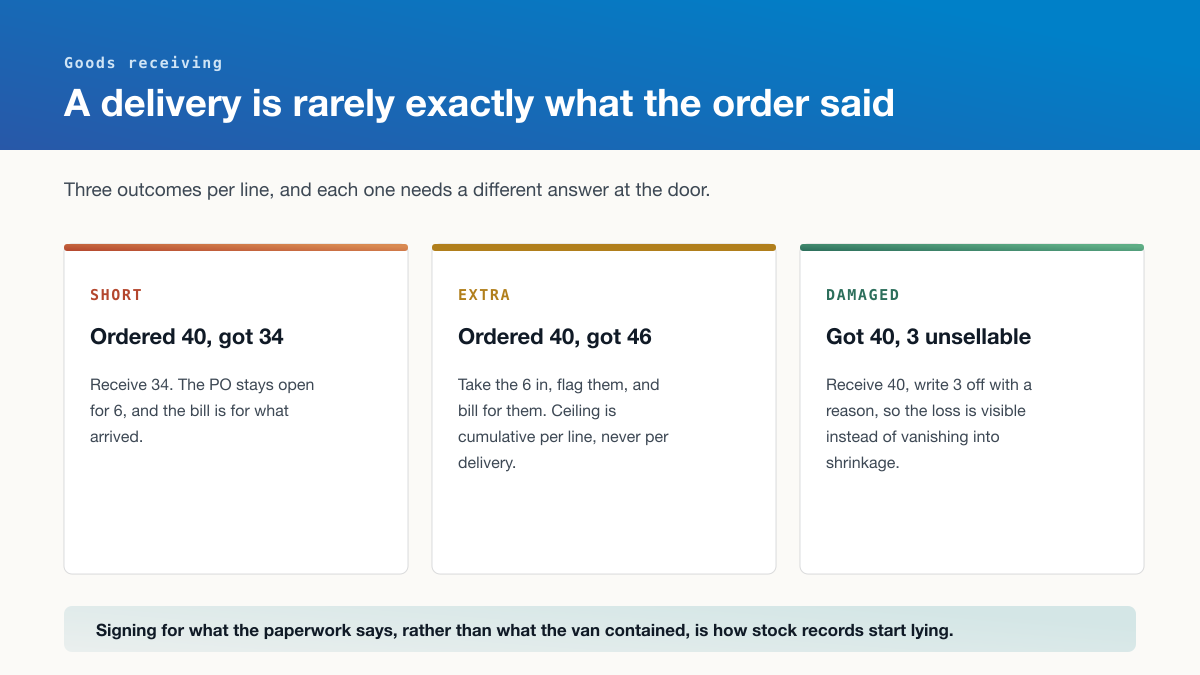
A delivery is rarely exactly what the order said. Three things happen, and each needs a different answer.
Short. You ordered 40 and 34 arrived. Receive 34. The order stays open for the remaining 6, and the bill is for what actually came. If you receive 40 because the note says 40, you have just created six units that exist only in your system.
Extra. You ordered 40 and 46 arrived. This happens more than people expect, especially with suppliers who round up to a carton. Take the six in, flag them, and bill for them. The important detail is that the ceiling on extras has to be cumulative per line, not per delivery, or a supplier sending six extra across three deliveries slips past a per-delivery check every time.
Damaged. Forty arrived, three are unsellable. Receive all 40, then write three off with a reason. Not receiving them hides the supplier problem. Receiving them silently hides the loss. Doing both, in that order, keeps two different facts visible.
Checking 312 lines without holding the van
The reason receiving gets skipped is time, so the fix has to be about time.
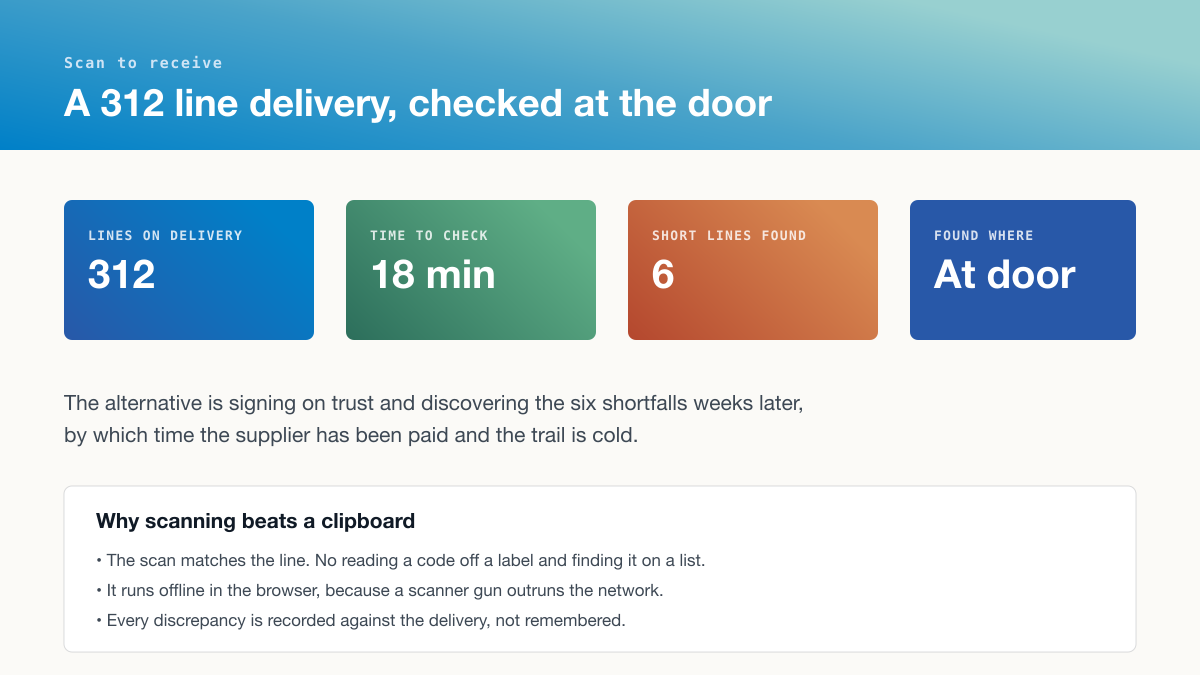
Scanning matches a line without anyone reading a code off a label and hunting for it on a list. In Modventrix this runs offline in the browser, because a scanner gun fires faster than a network round trip and faster than React can re-render. A check that depends on your connection is a check that stops during the exact rush when you need it.
Eighteen minutes at the door against six shortfalls found weeks later, after the supplier has been paid, is not a close decision.
The report you get for free
Once discrepancies are recorded against deliveries rather than remembered, you have a supplier scorecard without anybody filling in a form.
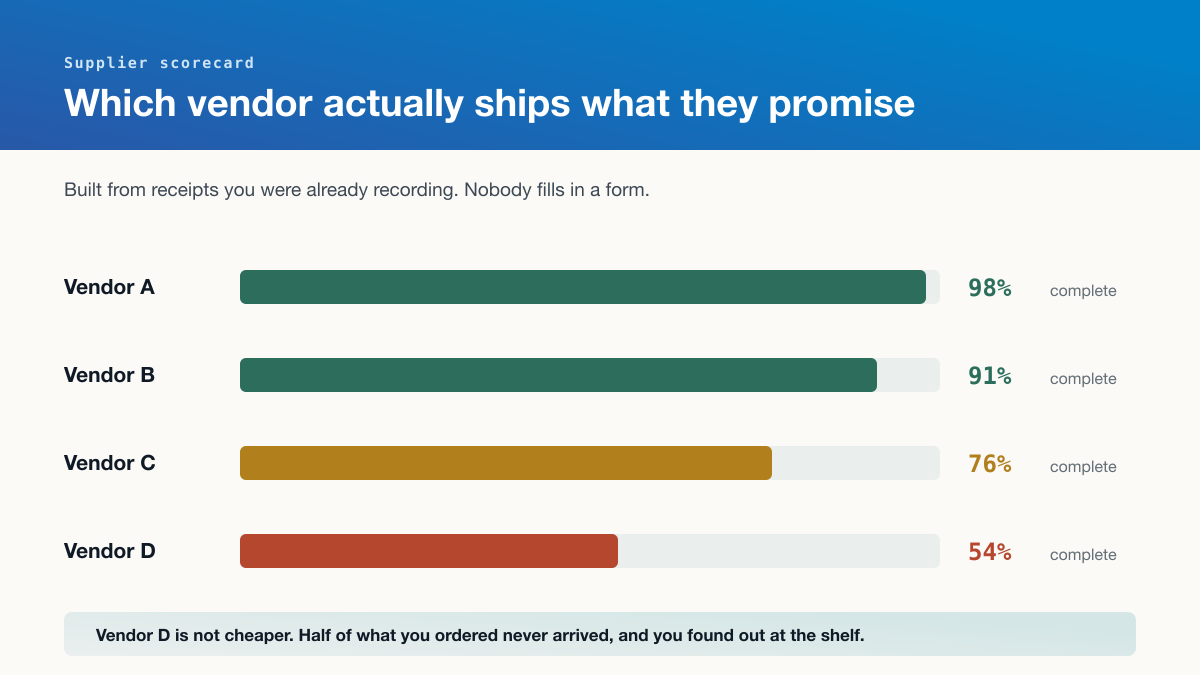
Vendor D is not cheaper. Half of what you ordered never arrived and you found out at the shelf, in front of a customer. That is a real cost that never appears on an invoice, and it is invisible until somebody counts it.
Tips and tricks
Check the expensive lines first. If you cannot check everything, check by value rather than by position on the note. Twenty percent of the lines carry most of the money.
Write the reason on every write-off. "Damaged in transit" and "expired on arrival" are two different supplier conversations. A blank write-off is a number you cannot act on.
Do not let the rider wait for a decision. Receive what arrived, note the gap, and settle the paperwork afterwards. Holding the van creates pressure to sign.
Photograph damaged goods at the door. Two minutes, and it ends the argument about whether it left the warehouse that way.
Reconcile the bill against the receipt, not the order. You pay for what came, not what you asked for. This is the single most common overpayment in wholesale.
Watch cumulative extras per line. Per-delivery tolerance looks sensible and leaks continuously.
What comes next
Once the goods are on the shelf accurately, the next question is whether every channel selling them agrees on the number: one shelf, two channels.
If the rate for these goods was still unknown when the order went out, that is handled at this same step: raising a purchase order before the rate is agreed.