
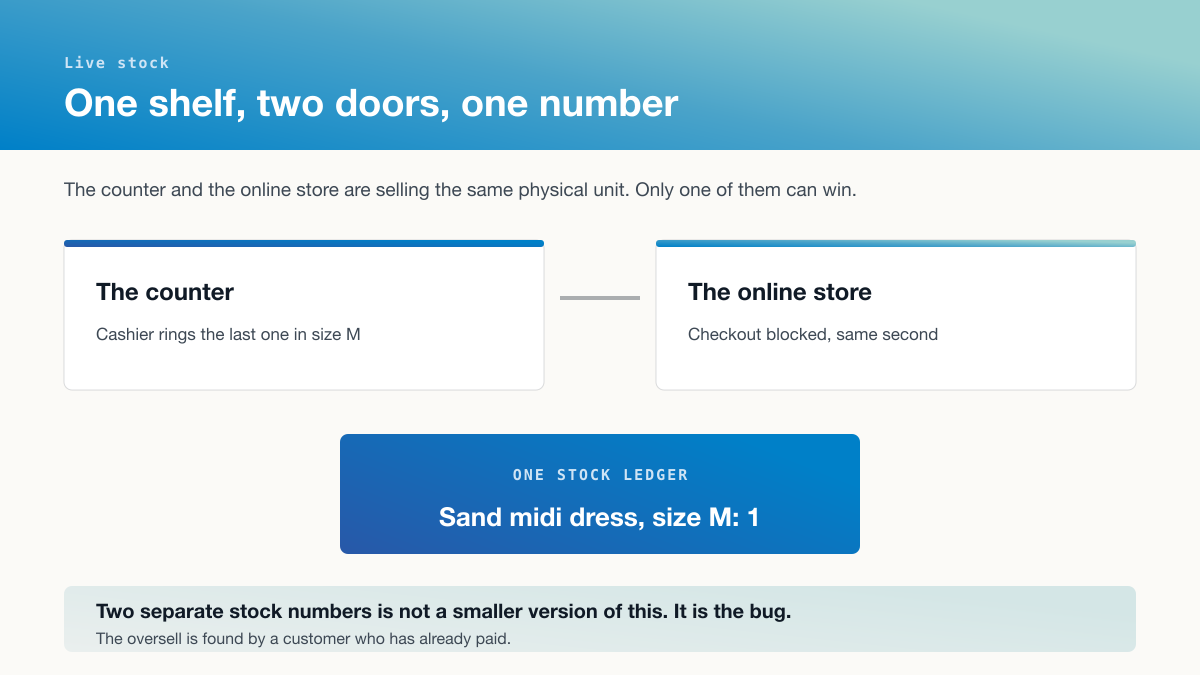
You have one sand midi dress left in size M. It is on a rail in your shop and it is on your website. Both of those are true, and only one of them can end in a sale.
Every seller who adds a second channel meets this, usually for the first time in front of a customer who has already paid.
The problem: two numbers for one shelf
The shop till keeps its own stock count. The website keeps its own stock count. Somebody updates one from the other, nightly if they are disciplined, weekly if they are busy, which is most people.
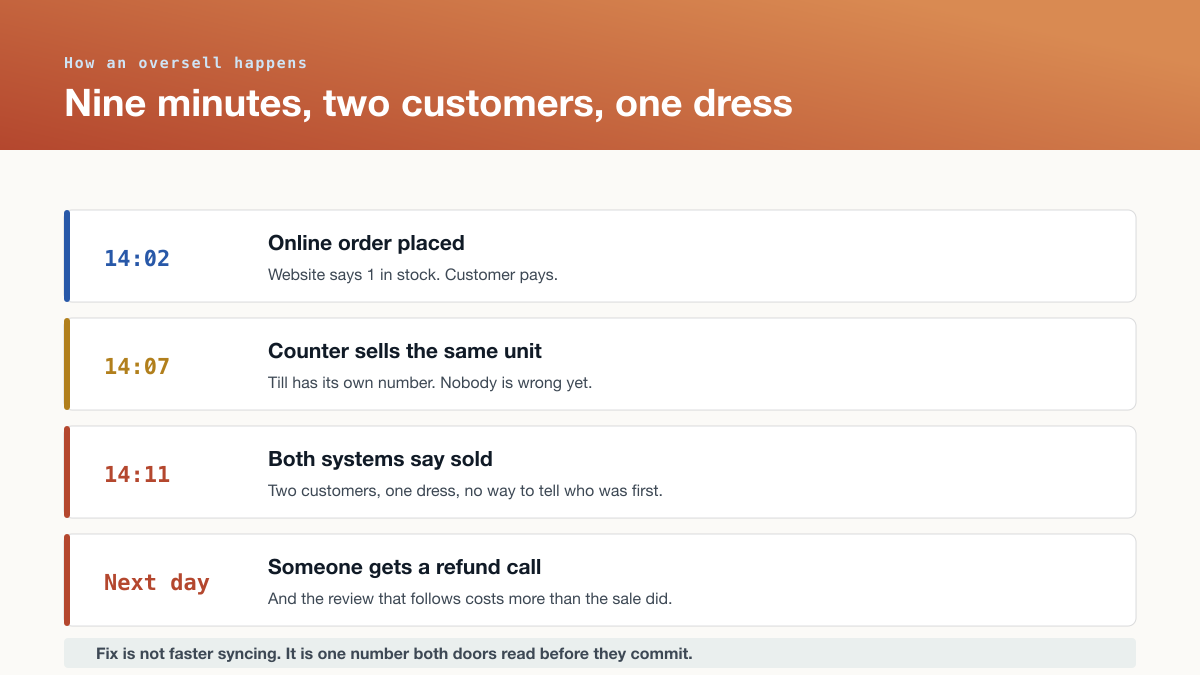
Nine minutes. Nobody did anything wrong. The counter staff did not know about the website order, and the website did not know about the counter. The system was working exactly as built.
The damage is not the lost sale. It is the refund call, and the review that follows, which costs considerably more than the dress.
The fix is not faster syncing
This is where most people go wrong. Syncing twice an hour instead of once a night narrows the window; it does not close it. Two numbers that are usually equal are still two numbers, and the gap is exactly where the oversell lives.
The only thing that actually works is one number that both doors read before either commits a sale.
The cashier rings the last one. The online checkout is blocked the same second, not at the next sync. That is what "live stock" has to mean to be worth anything, and it is how Modventrix connects the counter, the WhatsApp order page and the online store: they are three doors into one ledger, not three systems that agree most of the time.
The same problem across branches
Two shops each keeping their own count is the same bug wearing different clothes, and it costs you in the opposite direction: not an oversell, a refused sale.
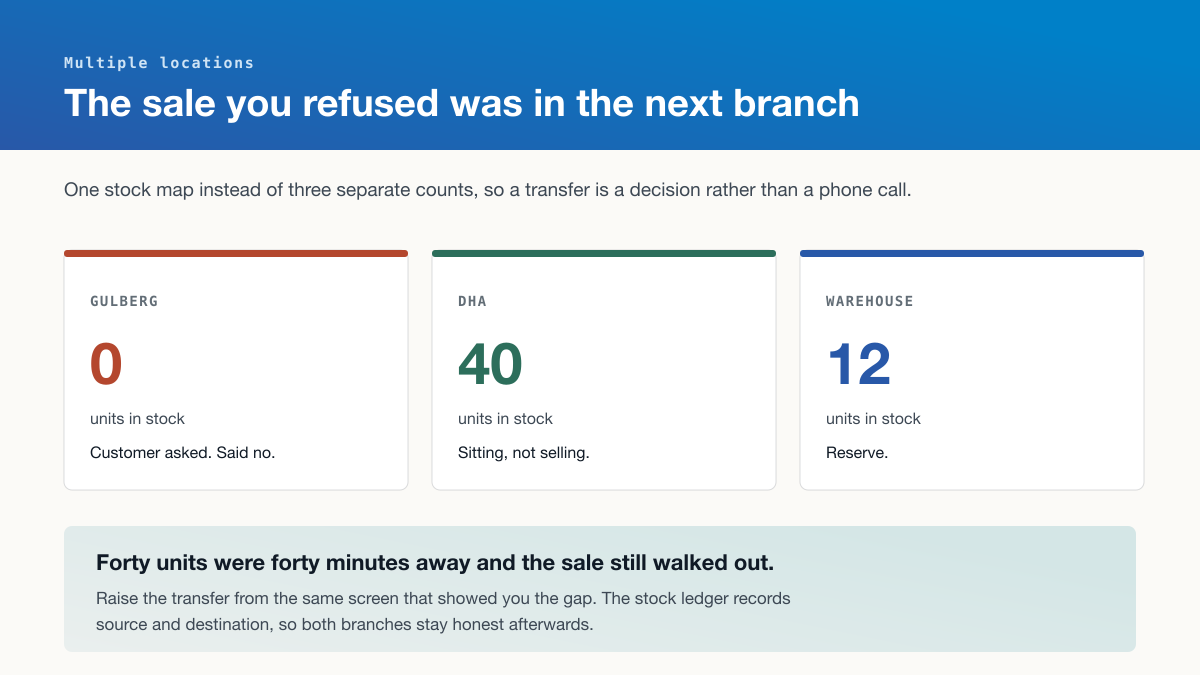
Forty units were forty minutes away and the sale still walked out, because the person at the counter had no way to see them. With one stock map, that is a transfer raised from the same screen that showed the gap, and the ledger records source and destination so both branches stay honest afterwards.
Tips and tricks
Decide which channel is allowed to oversell, deliberately. Sometimes the answer is the website, because a two day delay is acceptable online and impossible at a counter. Making that choice on purpose beats discovering it.
Hold stock at the point of order, not the point of payment. The gap between "added to cart" and "paid" is where the double sale happens on busy days.
Keep one product identity across channels. If the shop calls it "Sand Midi M" and the website calls it "sand-midi-medium", no system can reconcile them and no person will remember to.
Count fast movers twice a week if you sell in more than one place. The drift that matters is concentrated in the lines that move.
Test it on your worst day, not your quietest. Whether the number holds under a Sunday rush is the only test that means anything.
What comes next
All of this assumes the counter is recording sales accurately in the first place, which stops being obvious the moment the internet drops: the till that keeps working when the line goes down.
And the stock number is only as good as what went onto the shelf: what to do when a delivery does not match the order.